AI Deepfakes Are Collapsing Trust Faster Than Anyone Predicted
An altered protest photo. A fabricated arrest. A fake voicemail from a prime minister. The damage is no longer hypothetical.
Part of: AI Reckoning
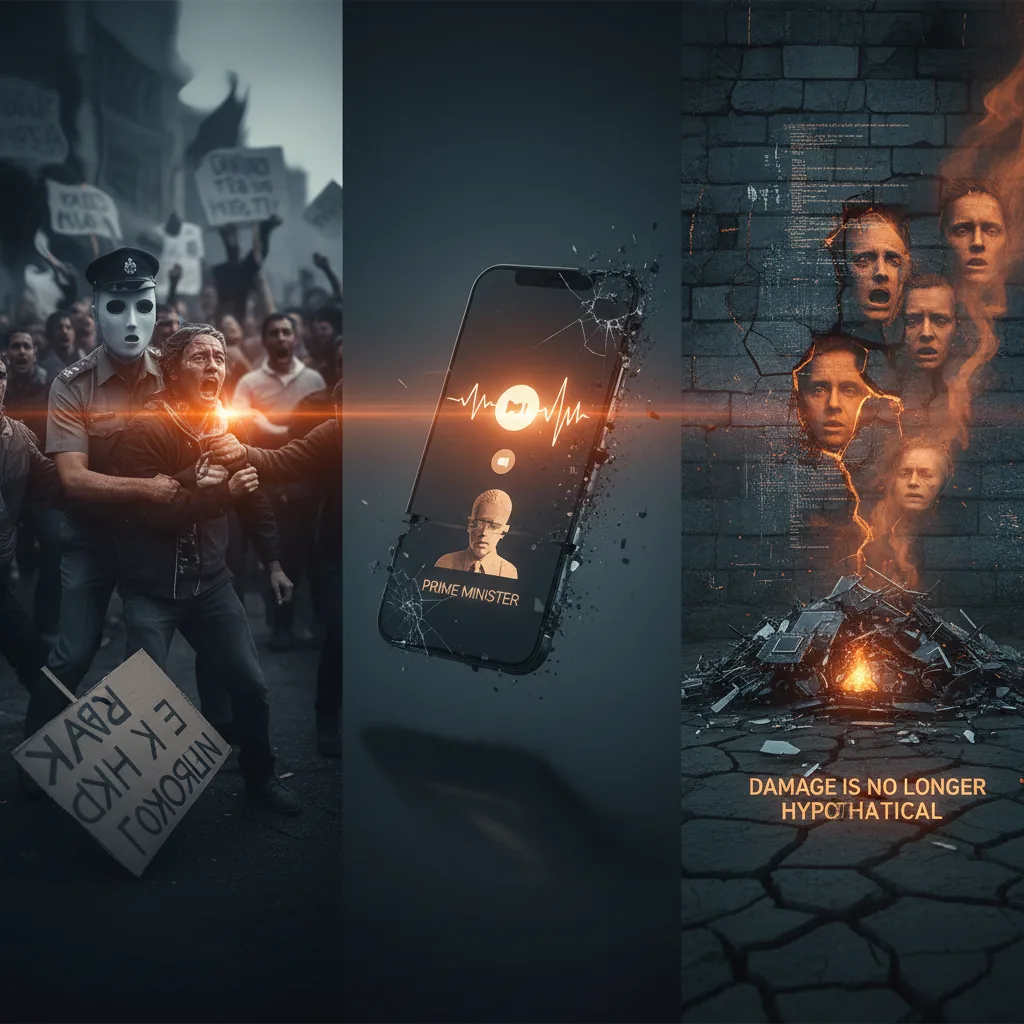
The phrase ‘liar’s dividend’ used to be an academic term. In 2026 it’s a Tuesday news cycle. The question is no longer whether deepfakes are convincing. It’s whether anyone can be expected to verify anything in real time, ever again.
The standard playbook for combating misinformation — slow it down, fact-check it, debunk it — was built for a world where the cost of producing a fake was high enough that the fact-checker could keep pace. AI removed that cost.
The deeper damage isn’t individual fakes that go viral. It’s the secondary effect: real footage of real events now has to defend its own authenticity. ‘That’s probably AI’ has become a reflexive dismissal of inconvenient evidence.
Canadian institutions are particularly exposed. Elections Canada has flagged synthetic-media risk to MPs since 2023. Major banks have rolled out internal training on voice-cloning fraud after a Royal Bank of Canada–branded deepfake circulated in early 2026.
Related read: Why this Interac-friendly site is becoming a quiet favourite up north. Sponsored
The legislative response is fragmented. Bill C-27’s AI and Data Act has provisions on synthetic-media disclosure but no enforcement teeth before 2027. Quebec has the most aggressive provincial framework, and even that is mostly civil rather than criminal.
Practically: the highest-leverage personal defence in 2026 is a voice-only family code word for sensitive calls, an unindexed second email for high-stakes accounts, and a default of disbelief toward any unsourced video clip designed to make you angry within ten seconds.
Elsewhere on The Daily Stash
- Her American Roommate Started a Spreadsheet of Every Weird Thing She Did. Then It Went Viral. – The Daily Stash
- Why this Interac-friendly site is becoming a quiet favourite up north – ZoccerSponsored
- He Stepped Outside for the Recycling and Didn't Come Back for Four Hours. His Wife Called the RCMP. – The Daily Stash
- Interac withdrawals in under 24 hours? One site keeps delivering – CasinaSponsored
- A Toronto Man Sued His Bank Over a 4PM Closing Time – The Daily Stash
Sources
Elsewhere on the web
Editorial picks · external- I Work in Hollywood. Everyone Who Used to Make TV Is Now Secretly Training AI — WIRED
- How a Job at OpenAI Became the Greatest Lottery Ticket of the AI Boom — WSJ via Mint
- Google Stopped a Zero-Day Hack That It Says Was Developed With AI — The Verge
- Oracle Workers Say They Were Fired After Training AI to Replace Them — TIME
- AI Job Loss Is Coming. Does Anyone Have a Plan? — New York Magazine
- The Real Threat of AI Is the Collapse of Trust — Poynter
Original editorial. Written by The Daily Stash Editors. See our editorial policy.